

The Corpse Flower: One of the Weirdest Rainforest Plants
23 Sep 2026 in Green living
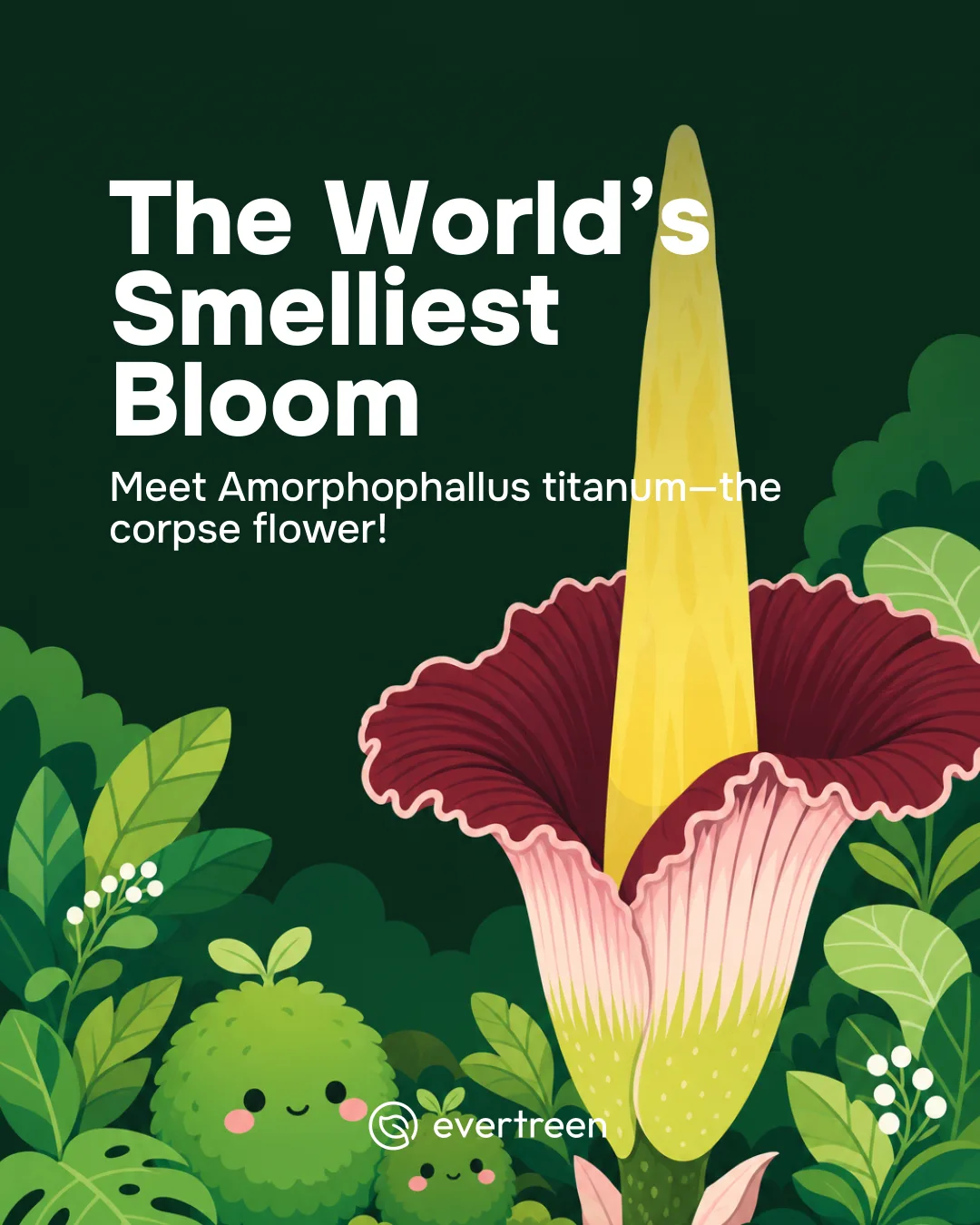
The corpse flower—scientific name Amorphophallus titanum—is one of the weirdest rainforest plants on Earth. This giant bloom is famous for its enormous size, rare blooms, and a pungent smell that’s eerily similar to rotting flesh. But why does this plant go to such lengths to make a stinky spectacle?
Why is the corpse flower so stinky?
The infamous odor of the titan arum isn’t a random quirk; it’s all about survival. When it blooms, the flower releases a strong smell to mimic decaying meat, attracting carrion beetles and flesh flies. These insects are the flower’s main pollinators. Since the bloom is both rare (once every few years) and short-lived (24–48 hours), the plant needs to make a dramatic impression quickly to ensure pollination.
A rainforest giant
The titan arum stands out for more than just its scent. It can soar to over 3 meters (10 feet) tall, making it the tallest unbranched inflorescence in the world. The bloom consists of a tall central column (the spadix) wrapped in a ruffled maroon and green sheath called a spathe. The spadix even heats up to help vaporize and spread the flower’s smell farther through the rainforest.
Where does it grow?
This remarkable plant is native to the equatorial rainforests of western Sumatra, Indonesia. In the wild, the corpse flower’s rarity is due to limited pollinator availability and habitat loss. Botanists and plant lovers worldwide now marvel at cultivated blooms that draw crowds to botanical gardens—sometimes making headline news with each rare flowering event.
Why are rare rainforest plants important?
Unusual species like Amorphophallus titanum remind us how intricate rainforest ecosystems are. Each plant, even the weird and dramatic ones, fits into a web of pollinators, decomposers, and other wildlife. The survival of one species may hinge on the survival of many others, underlining the value of biodiversity. Rare plants also excite public interest in rainforest preservation and restoration, making them ambassadors for conservation.
How does this connect to rainforest restoration?
Restoring and protecting rainforest ecosystems doesn’t just save trees—it supports everything that lives among them, from colossal corpse flowers to vital insect pollinators. Efforts like community reforestation and protecting standing rainforests help maintain the biodiversity needed for these wonders to thrive. Diverse reforestation projects, such as those Evertreen supports in places like Madagascar, Guatemala, and Indonesia, create opportunities for rare species to rebound.
Frequently asked questions
How often does the corpse flower bloom?
In the wild or cultivation, a corpse flower bloom is a rare event, occurring every few years, sometimes only once a decade.
How tall does the corpse flower get?
The titan arum can reach over 3 meters (more than 10 feet) tall, holding the record for the largest unbranched inflorescence.
Why does it smell like rotting flesh?
The scent attracts beetles and flies that normally feed on dead animals. These pollinators help ensure the flower’s rare bloom is effective in producing seeds for the next generation.
Where can I see a corpse flower bloom?
The corpse flower is native to Sumatra, but rare blooms are occasionally displayed at botanic gardens worldwide. Many share updates online when a bloom is imminent.
Curious about more hidden wonders of the rainforest? Explore Evertreen’s forest restoration projects to learn how protecting habitats helps unique plants and creatures thrive.
