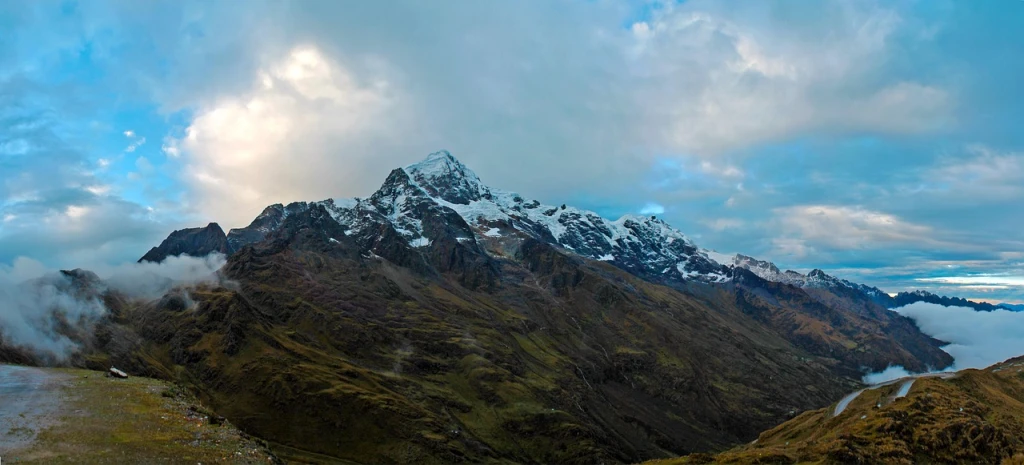
Restoration in Peru
 Peru
Peru

What you'll get

Public landing page
Our public forest profile showcases GPS coordinates, CO2 impact, and work hours created by your forest, including both trees planted and trees protected.

Certificate of planted or protected tree
An official document that serves as proof of your contribution to reforestation and restoration. It includes tree details and conservation info.
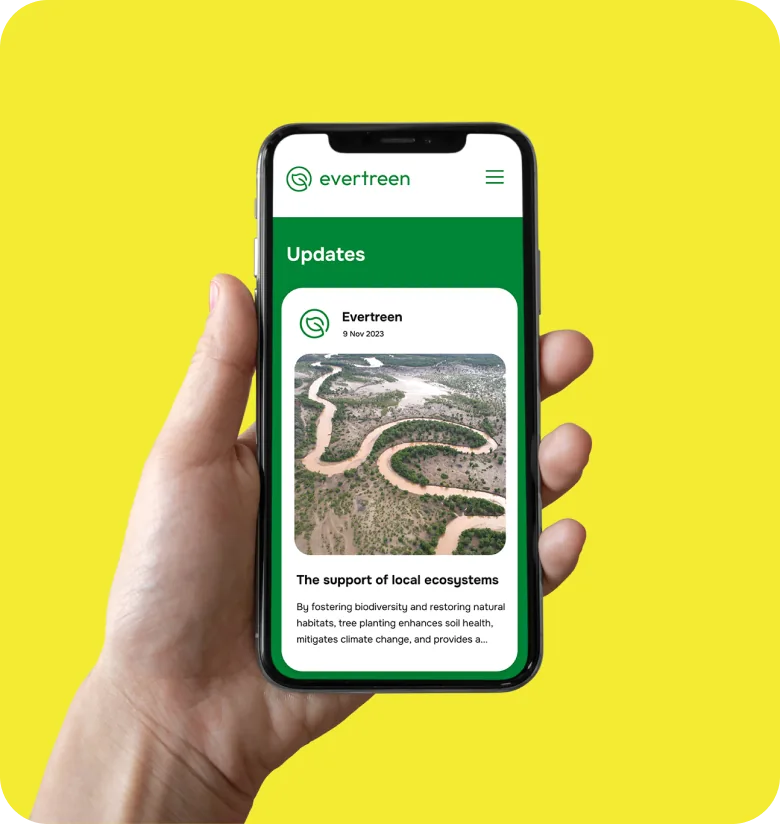
Project updates
Stay updated about the impact through dynamic videos showcasing the success of the trees you’ve helped plant and protect.
How to gift your trees
Choose your trees and schedule their planting or protection instantly
Log in to your account and navigate to the 'My Trees' section

Use your credit to generate your gift certificates

Send your gifts to family and friends!

About this project


Estimated over the tree’s lifetime — how we calculate this →
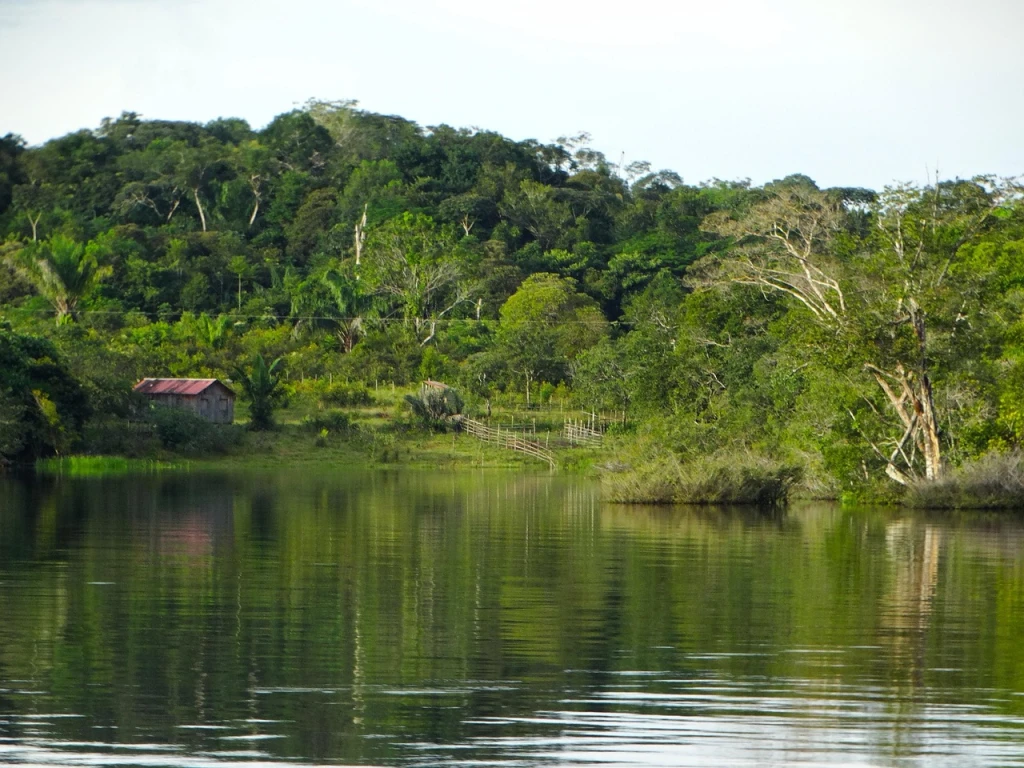
In the heart of the Peruvian Amazon, the Madre de Dios Amazon REDD Project weaves together a tapestry of reforestation and forest restoration initiatives across diverse landscapes. From lowland fringe forests adjacent to agricultural zones to community-managed reserves along the Madre de Dios River, it creates one cohesive initiative certified under the Verified Carbon Standard. Rather than presenting each activity in isolation, this narrative reflects how planting efforts in multiple locations come together as a living corridor of renewal, restoring degraded land, supporting soil health, and securing carbon removals under internationally recognized standards.
Across the region, previously cleared or degraded patches (some located near the Tambopata National Reserve or on transitional forest–savanna edges) are being transformed through natural regeneration assisted by local communities. In these areas, tree species that typically now exist only in fragmented groves are being encouraged to recover, re‑establishing canopy cover and gradually regenerating the dense biomass typical of intact Amazonian forest. Meanwhile, in upland zones near smallholder farms, mixed agroforestry plantings combine native timber and fruit species in formerly open fields—balancing ecological restoration with livelihood benefits.
The entirety of this initiative falls under a unified REDD-based framework, carefully adhering to the VCS methodology for avoiding deforestation and active restoration. Each hectare regenerated is rigorously tracked through remote sensing and ground‑truthing, measuring shifts in canopy structure and biomass density relative to reference baselines. These methods ensure that carbon removals are measurable, additional and permanent which are precisely the conditions required to generate Verified Carbon Units that conform to Verra’s rigorous standards
From east of Puerto Maldonado to buffer zones adjacent to protected areas, the project converges ecological renewal with social responsibility. Local communities play an integral role byleading site selection, planting, maintenance, and monitoring. Their stewardship fosters resilience not only in restored ecosystems but in the socio‑economic fabric of the region.
Regionally, Madre de Dios has experienced intense deforestation pressure in recent decades—both for small-scale agriculture and unregulated logging—leading to fragmented forest boundaries, soil erosion, and biodiversity loss. By knitting together regenerating forest patches in multiple districts, the initiative enhances connectivity across corridors used by wildlife, offers protection against soil runoff during the rainy season, and gradually rebuilds habitat complexity. The resulting corridors help sequester significant quantities of carbon as young trees mature and biomass accumulates.
Crucially, these efforts are not isolated experiments. They are AFOLU (Agriculture, Forestry, and Other Land Use) carbon offsetting projects, certified under rigorous international standards such as the American Carbon Registry (ACR) and Verra (VCS). Independent verification ensures that every credit issued reflects measurable, additional, and permanent climate benefits.
Evertreen participates only as an intermediary, helping organizations and individuals around the world channel funding into these certified projects. By doing so, Evertreen enables businesses and citizens alike to contribute to meaningful, verifiable climate action while supporting the protection of most treasured forest landscapes.
The combined effort delivers multiple environmental benefits: stabilizing soil in formerly eroded slopes, boosting groundwater retention, providing shade that reduces fuel‑load ignition risk, and improving air and water quality. As trees mature, the growing biomass sequesters CO₂ in measurable, independently audited increments, contributing to global climate mitigation goals. Meanwhile, local livelihoods benefit from agroforestry yields and technical training—creating a virtuous cycle of ecological and social resilience.
By supporting lifecycle‑tracked, VCS‑certified reforestation in Madre de Dios, clients enable high-integrity carbon offsets that deliver real, permanent removals. All of which is embedded in a single narrative of ecosystem recovery. Across multiple geographies in the region, scattered planting sites become a contiguous matrix of restored forest. Together, they offer not just tonnes of carbon removed, but a story of regeneration, biodiversity return, and sustainable collaboration between communities and global partners.
This overarching restoration initiative is more than the sum of its mapped locations. It is an unfolding narrative of landscape healing and climate action, built under Verra’s Verified Carbon Standard, verified to deliver verifiable carbon units, and facilitated through Evertreen’s platform to transparently bridge clients with on‑the‑ground impact.