Restoration in Brazil
 Brazil

What you'll get
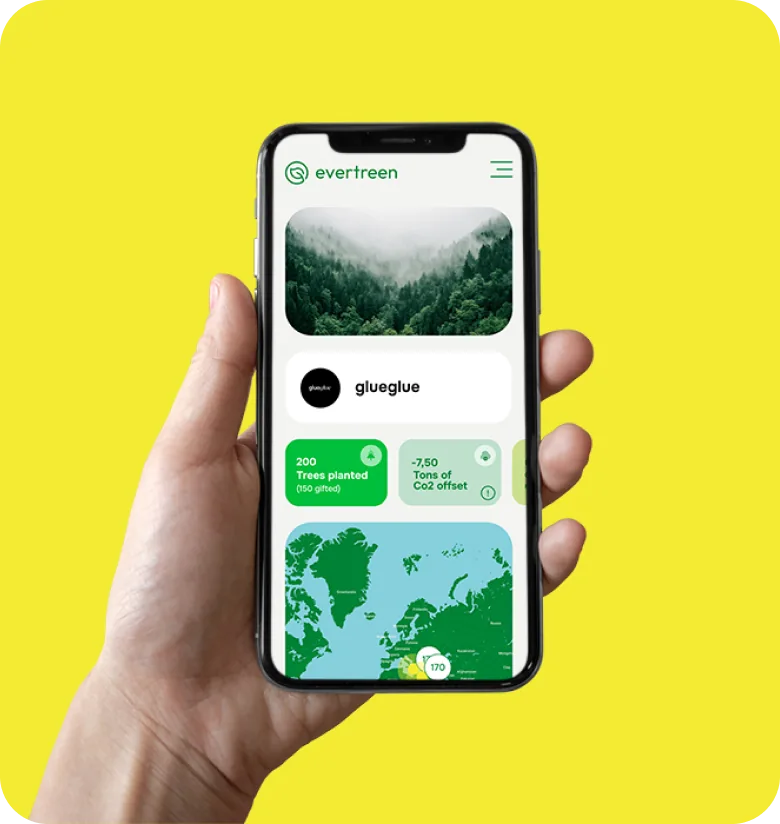
Public landing page
Our public forest profile showcases GPS coordinates, CO2 impact, and work hours created by your forest, including both trees planted and trees protected.

Certificate of planted or protected tree
An official document that serves as proof of your contribution to reforestation and restoration. It includes tree details and conservation info.
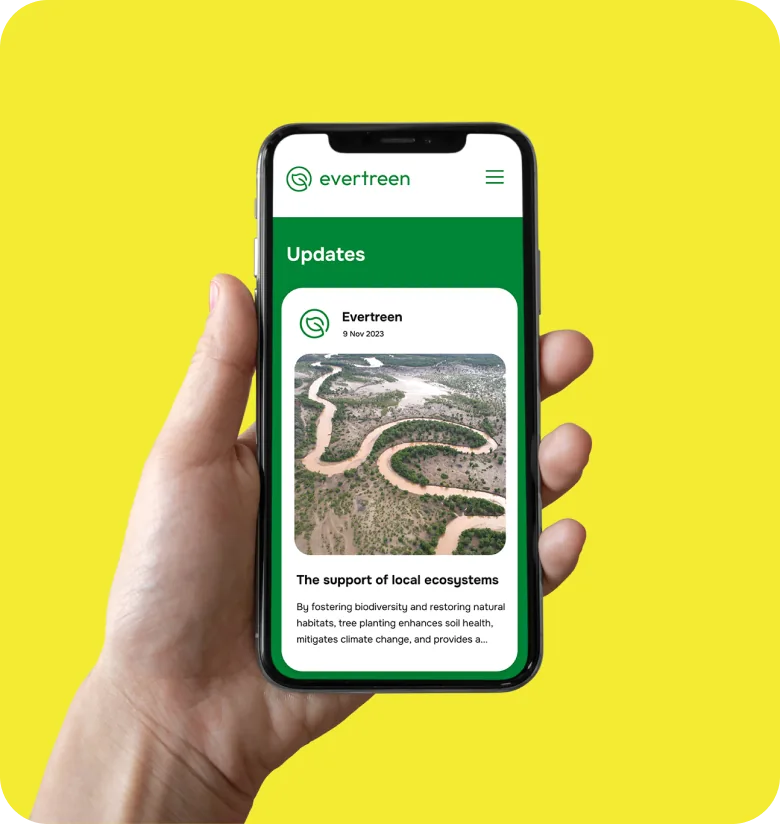
Project updates
Stay updated about the impact through dynamic videos showcasing the success of the trees you’ve helped plant and protect.
How to gift your trees
Choose your trees and schedule their planting or protection instantly

Log in to your account and navigate to the 'My Trees' section

Use your credit to generate your gift certificates

Send your gifts to family and friends!

About this project


Estimated over the tree’s lifetime — how we calculate this →
Registry status and availability. This product funded certified carbon credits from REDD+ projects in Brazil. One of the projects described below, the Rio Anapu-Pacajá REDD Project (Verra VCS 2252), is listed as On Hold on the Verra registry (checked 16 September 2026). This product is closed to new customers.
Brazil’s Amazon rainforest — often called the lungs of the Earth — is not only a symbol of global biodiversity but also a critical carbon sink in the fight against climate change. Across its vast landscapes, from the dense forests of Pará to the biodiverse ecosystems of Amapá and Acre, a comprehensive forest conservation initiative is underway. This effort brings together advanced monitoring, community empowerment, sustainable forest use, and verified climate standards to protect one of the planet’s most ecologically important regions.
At the heart of this initiative is the protection and sustainable management of large forest areas through REDD+ (Reducing Emissions from Deforestation and forest Degradation) mechanisms. These projects are not managed by Evertreen but are fully certified and implemented under globally recognized frameworks such as VERRA’s Verified Carbon Standard (VCS) and the American Carbon Registry. Evertreen facilitates the funding process, allowing its clients to directly support impactful climate solutions while respecting the integrity and governance of independently managed AFOLU (Agriculture, Forestry and Other Land Use) carbon offsetting projects.
In the state of Pará, the Rio Anapu-Pacajá REDD Project is working to secure 165,707 hectares of highly threatened Amazonian forest. This region, marked by instability and land disputes, has seen aggressive deforestation driven by illegal land grabbing. The project addresses these root causes by helping traditional Riverine communities gain legal land rights — a foundational step in preventing forest loss. Additionally, families are being equipped with fuel-efficient cookstoves, reducing pressure on surrounding forest resources and improving indoor air quality. As carbon credit revenues grow, so too does the support provided to more local households.
Further west in Acre, the Russas Project employs a holistic approach to forest conservation, rooted in both environmental science and local engagement. Developed under the Verified Carbon Standard (VCS) and the Climate, Community and Biodiversity Standard (CCBS), this initiative supports payments for ecosystem services to incentivize forest preservation. Its success is closely tied to meaningful partnerships with local communities and regional authorities. By creating tailored plans that reduce land pressure, the project enables sustainable livelihoods while preserving vital habitats.
Meanwhile, in Amapá, an ambitious REDD+ project is set to avoid over 3.4 million metric tons of CO₂ emissions over three decades. Spearheaded by the Jari Group and Biofilica, the project combines sustainable forest management practices — including biodiversity monitoring, scientific research, and economic development — to maintain forest cover and ecological balance. This northeastern region of the Amazon, often overshadowed by deforestation hotspots, is being recognized for its proactive approach to conservation.
Another standout effort, the REDD+ Maísa Project, is also rooted in the state of Pará. A collaboration between Biofilica Environmental Investments and local agro-industrial groups, this project is a model of how economic activity can align with conservation. It promotes sustainable forest management through low-impact logging, small-scale farming, and the harvesting of non-timber forest products — all while generating verified carbon credits to finance long-term forest protection.
Together, these projects form a resilient and forward-thinking strategy that protects Brazil’s forests by empowering those who depend on them, restoring ecological integrity, and ensuring transparency through internationally recognized standards. Each initiative reflects a unique context and set of solutions, but they are united by a single vision: to conserve the Amazon in ways that are scientifically sound, socially inclusive, and globally impactful.
Crucially, these efforts are not isolated experiments. They are AFOLU (Agriculture, Forestry, and Other Land Use) carbon offsetting projects, certified under rigorous international standards such as the American Carbon Registry (ACR) and Verra (VCS). Independent verification ensures that every credit issued reflects measurable, additional, and permanent climate benefits.
Evertreen participates only as an intermediary, helping organizations and individuals around the world channel funding into these certified projects. By doing so, Evertreen enables businesses and citizens alike to contribute to meaningful, verifiable climate action while supporting the protection of most treasured forest landscapes.