Forests are absorbing less carbon than they used to: heat stress, drought, wildfires and degradation are weakening the world's largest natural carbon sink precisely when we need it most. Parts of some forests now emit more carbon than they capture — making restoration and protection urgent climate priorities.
Why absorption is declining
- Heat and drought stress. Stressed trees grow slower and absorb less CO₂; many die.
- Wildfires. Burning releases decades of stored carbon in days.
- Degradation. Logged and fragmented forests store far less than intact ones.
- Saturation effects. Older forests absorb more slowly; without new growth, net uptake falls.
- Pests and disease. Warmer winters let insect outbreaks survive and spread, killing standing timber that then decays or burns.
The feedback loop, in plain terms
The mechanism that makes this dangerous is circular. Warming increases drought and fire; drought and fire kill trees and release their stored carbon; the released carbon adds to warming. A forest that was a sink becomes, at least temporarily, a source — and the transition can happen far faster than the century it took the carbon to accumulate.
Two features make the loop hard to reverse. First, the release is fast and the recapture is slow: a fire can undo decades of growth in an afternoon, and replacing it takes decades again. Second, degradation compounds — a fragmented forest is drier at its edges, more flammable, and more accessible to further clearing.
Degradation is the quiet half of the problem
Deforestation is measurable from space and politically visible. Degradation — selective logging, edge effects, understory fires, fragmentation — leaves a canopy that still reads as "forest" in satellite cover statistics while storing substantially less carbon and supporting less biodiversity.
That matters for how you read good news. A country reporting falling deforestation may still be losing carbon storage through degradation, which is one reason serious accounting looks at carbon stock rather than at hectares of cover.
What this means for climate strategy
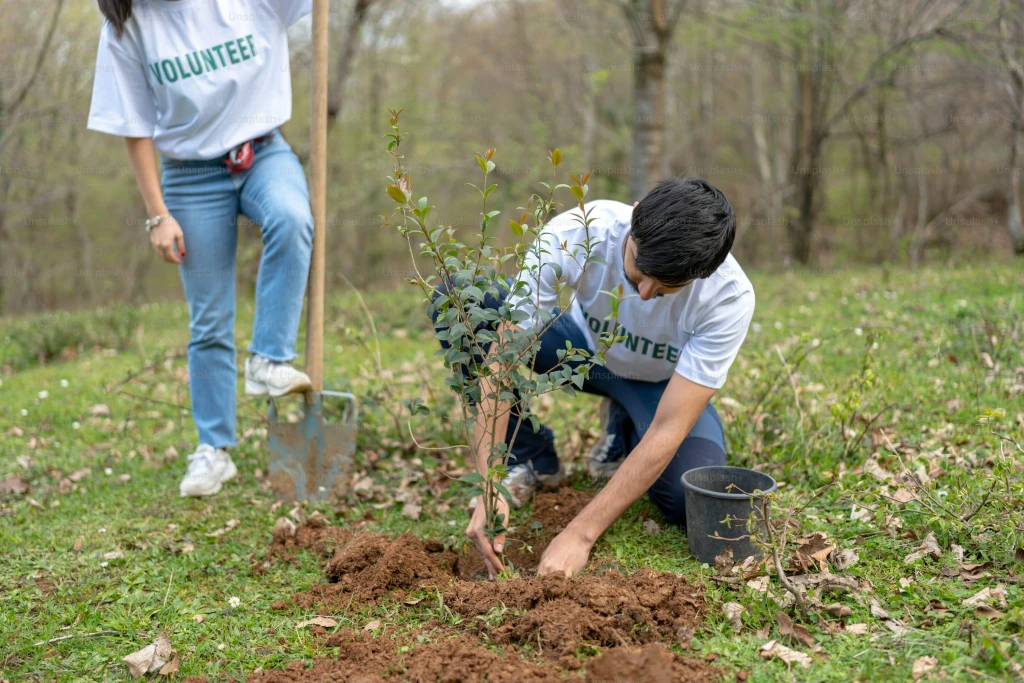
We can no longer treat forests as an infinite free sink. Emission cuts matter more, and so does actively rebuilding absorption capacity: young, healthy, diverse forests are vigorous carbon absorbers for decades. Where trees are planted — species, climate, survival — determines how much carbon is truly captured, which is why monitoring matters.
Three practical implications follow:
- Protection beats replacement. An intact forest already holds its carbon; a replanted one has to rebuild it over decades.
- Diversity is resilience. Mixed native species withstand drought, pests and fire better than uniform plantations, and a forest that survives outperforms one that grew faster and burned.
- Permanence has to be managed, not assumed. This is why certified forestry projects hold buffer pools against reversal and why monitoring outranks planting totals.
Does this undermine the case for planting?
No — it sharpens it. If the existing sink is weakening, rebuilding absorption capacity becomes more valuable, not less. But it does undermine two comfortable assumptions: that a planted tree is a guaranteed permanent store, and that natural sinks will quietly absorb the difference while emissions continue. Both were always optimistic; the data has made them untenable.
The honest framing is that planting is a long-duration removal with managed risk, which belongs alongside emission cuts rather than in place of them. The mechanics are in how do trees absorb CO₂.
Rebuild the sink, verifiably
Evertreen funds trees in verified, monitored projects, shows each project's location, photos and updates, and publishes its methodology openly — see how we estimate tree CO₂. Plant trees that restore absorption capacity, with conservative per-species estimates that allow for mortality rather than assuming it away. Where audited tonnes are needed, certified Verra and Gold Standard credits are available alongside planting.
Frequently asked questions
Are forests still carbon sinks? Globally yes, but a weakening one — climate stress, fires and degradation are reducing net absorption, with some regions becoming sources.
Why do young forests matter? Growing trees absorb CO₂ vigorously for decades; restoring degraded land adds new absorption capacity.
How is real absorption verified? Through species-specific estimates, geolocation and monitoring — Evertreen publishes its methodology and shows each project's location, photos and updates.
What is forest degradation? Damage that reduces a forest's carbon and biodiversity without removing the canopy entirely — selective logging, fragmentation, edge effects and understory fire.
Do older forests absorb more or less than young ones? Older forests store the most carbon but absorb it more slowly. Young growing forests absorb fastest, which is why both protection and restoration are needed.
Does this mean planting trees is pointless? The opposite. A weakening natural sink makes rebuilt absorption capacity more valuable, provided permanence and survival are actively managed.
What is the single most effective response? Cutting emissions, followed by protecting intact forest, followed by restoring what has been lost — in that order of impact.